
Request Property Marketing Plan
You're one step away from getting a free marketing plan that shows how we'll sell your home for the most amount of money in the least amount of time - hassle free.
San Antonio buyer guide
Buying a Home in San Antonio: Start With Your Life, Not the Listing
Before you choose a house, decide what life it has to support. Your commute, your payment, your routine, your layout, what you're willing to maintain and how long you'll stay usually matter more than the feature that photographs best. This guide helps you compare real houses side by side, and it works on your phone between showings.
Ana Warmke · Broker-Associate · Team Lead, Warmke Real Estate Group · Keller Williams Heritage
Before your first showing
Where do the groceries come in?
How long is the drive at the hour you actually leave?
What payment still lets you live the rest of your life?
Twelve questions like these are in the life list below.
We don't start by asking what style of house you like. We start by asking what your life needs this house to do.
Anyone can open a door. The work that matters is helping you slow down, see the tradeoffs and compare two properties honestly, so one great kitchen doesn't hide five problems you'd live with every day.
Everything below is a tool you can actually use: a list to write before you tour, a way to test an address, a scorecard for the driveway, and a worksheet for the night you're choosing between two homes.
Step one
Before you make a wish list, make a life list.
Answer these for your own household before you look at a single listing. Short answers are fine. Honest ones are better.
Where does each person who works go, and how many days a week?
What drive time would still feel fine in month twelve, not just week one?
What does a normal weekday look like, from the first alarm to the last errand?
Which rooms get used every day, and which only sound nice?
Do you need a yard, a fence, a dog door, or a floor that can take claws?
Do you need a door that closes, and does anyone take calls at the same time?
How many cars, trucks, trailers or boats need a place to go?
What gear do you own, and where does it live right now?
How often do people stay over, and where do they sleep and park?
Would you rather have everything on one level, or are stairs fine for how you plan to live here?
How much of your weekend do you want to spend on a yard, a pool or repairs?
How long do you expect to stay, and what might change about how you use the house?
The point of the exercise is to separate what sounds nice from what will actually make a Tuesday easier. Bring this list to your first conversation with us. It shapes the whole search.
Test the address
The 15-minute life test.
Pick the five places you go most in a normal week: work, the grocery store, the gym, a relative's house, wherever. Map each one from the specific address you're considering, not from the neighborhood's name.
Nothing has to be within 15 minutes. The point is to see how the house actually functions on a map before you commit to living there.
Then answer what the map doesn't show
- How long is the drive at the hour you actually leave, not at 2 p.m. on a Sunday?
- How long does it take just to get out of the subdivision?
- Which direction does the nearest highway entrance send you, and is it the direction you need?
- Is there one practical road in and out, or several?
- What happens on a day with two trips across town?
- Where is the grocery store you'll really use, not just the closest one?
- What's on the land next door today, and what's planned there? City and county records will tell you more than a guess.
Still choosing where in the metro to live? That's a different question. Start with our Moving to San Antonio Guide, then come back here to compare specific houses.
Compare the real cost
Start with a comfortable payment, not a maximum price.
Two houses with the same list price can come with very different monthly costs. When you're comparing two specific homes, look at every line of the payment, not just the price.
- Principal and interest
- Property taxes
- Homeowners insurance
- HOA dues
- Separate district assessments, where they apply
- Mortgage insurance, where it applies
- Utilities
- Maintenance and repairs
- Landscaping, pool and pest service
- Commuting
- Future replacements: roof, HVAC, water heater
The question isn't only "What can I qualify for?" It's also "What payment still lets me live the rest of my life?"
Property taxes are the line that surprises people most. In Texas, the appraisal district sets the value, and each taxing unit (city, school district, county, and sometimes a special district) sets its own rate. Two houses a mile apart can sit in different taxing units. Look up the actual property at the county appraisal district, and have a lender build your estimate. We don't calculate payments or quote rates. That's a licensed lender's job, and it should be.
For how financing fits into the purchase, see our financing overview.
Use it in the driveway
The Home Function Scorecard.
This isn't a points system. Tap one answer per category for each home, right after the showing, while the details are fresh. Your choices stay on this screen until you refresh the page. Nothing is saved or sent anywhere.
- Works well: no concerns
- Tradeoff: not ideal, but you can live with it
- Problem: could be a deal breaker
- Need info: ask before you decide
| Category | Ask yourself | Home A | Home B |
|---|---|---|---|
| Location | Does this address work for my five weekly destinations? | Home A | Home B |
| Monthly cost | Does the full lender estimate fit my comfortable payment? | Home A | Home B |
| Layout | Do the rooms connect the way my day moves? | Home A | Home B |
| Condition | What would I need to fix, and how soon? | Home A | Home B |
| Storage | Where does everything I own right now actually go? | Home A | Home B |
| Parking | Do my vehicles fit, and where do guests park? | Home A | Home B |
| Outdoor space | Is the yard usable for what I'll really do with it? | Home A | Home B |
| Maintenance | Is the upkeep a match for the time and money I want to spend? | Home A | Home B |
| Commute | Is the drive acceptable at the hour I actually leave? | Home A | Home B |
| Daily convenience | Are groceries, errands and the stops I make weekly easy to reach? | Home A | Home B |
| Future flexibility | Does this still work if how I use the house changes? | Home A | Home B |
Any "Problem" deserves a real conversation before you write an offer. Every "Need info" is a question for us, the inspector, the lender or the HOA. Print it to save your answers.
What tours skip
A floor plan has to survive a Tuesday.
Tours show you the countertops. They don't show you where the groceries land. Walk the house the way you'd actually live in it.
Coming and going
- Where do groceries come in, and how far is that from the kitchen?
- Where do bags, shoes and keys land when you walk in?
- Where do guests park, and which door do they use?
- Where do the trash and recycling bins live between pickups?
Storage nobody photographs
- Where do the vacuum, holiday bins, bikes, tools and lawn equipment go?
- Is the garage deep enough for your vehicle and your stuff at the same time?
- Where would an EV charger go, if you ever need one?
Living in it
- Where's the laundry compared to the bedrooms?
- Can two people get ready at the same time without trading turns?
- Where would you take a private work call?
- Where does the dog go out?
- Does the primary bedroom share a wall with the living room or the garage?
- Will your furniture fit? Is there usable wall space, or is every wall a door or a window?
- Do the stairs work for how you move through a day, now and later?
Bring your tape measure and your largest piece of furniture's dimensions. It's the cheapest mistake to prevent.
How to tour
Walk every house you like twice.
Could this be home?
Let yourself react. Light, flow, feel. Notice what you'd love and what bothers you right away.
How does it actually work?
Go back through slowly and look at the things that cost money or change your daily routine.
On the second pass, look at: ceiling stains · window condition · floor transitions · cracks · doors that don't latch · water pressure · HVAC age · roof information · drainage and grading · fencing · electrical panel · appliances · storage · garage dimensions · traffic and noise · condition of neighboring properties · sun exposure · privacy · utility equipment · retaining walls · trees close to the structure · pool equipment, if there's a pool.
A careful showing is not a home inspection. Neither you nor your agent replaces a licensed Texas inspector. Under the Texas Real Estate Commission's rules, an inspection reports the condition of components at the time of the inspection, and inspectors don't have to inspect concealed areas or predict how long a system will last. Hire a TREC-licensed inspector and read the whole report.
Know what you can fix
Easy to change vs. impossible to change.
Easier to change
- Paint
- Light fixtures and hardware
- Some flooring
- Appliances
- Landscaping
- Cosmetic finishes
Hard, expensive or impossible
- The location, the lot and the street
- The commute
- Which way the house faces
- What's built next door
- HOA structure and taxing jurisdiction
- Major layout, lot slope and garage configuration
- Structural elements
You can replace a dated light fixture in an afternoon. You'll make the commute every weekday you own the house.
Look past the price
Condition, the lot and the rules that come with the house.
A lower price isn't always a lower total cost
Homes fall roughly into three groups: move-in ready, cosmetic work, and significant repair. A cheaper house that needs a roof and an HVAC system may cost more in the first two years than the one priced higher. Before you compare, get real numbers from licensed professionals on anything major: roof, HVAC, water heater, windows, foundation, plumbing, electrical, the pool, a septic system or well if there is one, and any renovation you're planning. We don't estimate repair costs. Contractors and inspectors should.
The lot matters as much as the house
Look at usable yard, not just lot size. Then check slope, drainage, orientation, trees, easements, privacy, where the lot sits on the street, corner or cul-de-sac position, traffic, what's on the adjacent land, utility equipment, retaining walls and planned development nearby. This applies to resale and new homes alike. If you're considering a builder, our New Construction Guide covers lots in that context.
Read the HOA and deed restrictions before you fall in love
Many San Antonio-area homes come with an HOA, deed restrictions or both. Things that are commonly restricted include parking, trailers, boats and RVs, short-term rentals, fencing, exterior changes, solar, landscaping, pets, outbuildings, pools and home businesses. If anything on your life list depends on one of these, get the actual governing documents and read them during your due-diligence window. We'll help you find the documents and flag questions. If you need a document interpreted, talk to a Texas real estate attorney.
Decide with a clear head
Buy for your life. Know what you're also buying for the next buyer.
You shouldn't buy a house only for resale. But someday you'll probably sell it. A few things can make that harder: an unusual layout, very limited parking, a busy road next to the property, heavy customization, rooms that no longer match how people live, condition, planned development and a lot of similar homes for sale nearby. You can still buy a house with some of these. Just know you're doing it.
Sort every want into one of four buckets
Keep this list short. A comfortable monthly payment might belong here.
A 20-minute commute may matter more than a second living area.
A white kitchen is probably a preference, not a need.
The things that end the conversation no matter what else is great.
Only you know which bucket each item belongs in. For one person, three bedrooms is a need. For another, it's a bonus.
The 24-hour test
If another buyer bought this house tonight, what would you actually be upset about losing?
Is it the kitchen? Or the location, the payment, the layout, the lot, the easy errands, the combination that would be hard to find again? And one more question: what are you making excuses for because you love one feature? Emotion is part of buying a home, and it should be. This test just makes sure it isn't the only thing deciding.
Choosing between two homes
Property A vs. Property B worksheet.
Fill this in the night you're deciding. It doesn't pick a winner. It puts the tradeoffs on one page so you can see them. Get the payment figures from your lender, not a website estimate.
Swipe the table sideways to see both homes →
| Compare | Property A | Property B |
|---|---|---|
| Address | ||
| Purchase price | ||
| Monthly payment (lender estimate) | ||
| Property taxes | ||
| Insurance | ||
| HOA | ||
| Commute | ||
| Layout | ||
| Condition | ||
| Immediate repairs | ||
| Storage | ||
| Lot | ||
| Parking | ||
| Maintenance | ||
| Daily convenience | ||
| Future flexibility | ||
| Questions still open |
The process, briefly
How buying works in Texas.
The steps come after the decisions for a reason. Once you know what you're looking for, the process is manageable.
- Goals conversation. Your life list, timing and budget.
- Financing and preapproval. With a lender you choose.
- Define the search. Areas, must-haves, deal breakers.
- Tour and compare. The scorecard and worksheet above.
- Make an offer. Price, terms and deadlines, not just a number.
- Earnest money and option fee. Delivered to the title company.
- Inspection and due diligence. Inside your option period.
- Appraisal and financing. Your lender's process, with deadlines we track.
- Final walkthrough. Confirm the home's condition before closing.
- Closing. Sign, fund, get your keys.
Four terms worth knowing
Earnest money is a deposit that shows the seller you're serious. It's held by the title company (the escrow agent) and applied at closing. It can be at risk if you don't meet the contract's terms.
Option period is a negotiated number of days, bought with an option fee, during which the standard Texas resale contract lets you end the contract by giving notice. TREC's contract requires the option fee to be delivered to the title company within three days after the effective date.
Inspection is a licensed inspector's report on the home's condition at the time of the inspection. Most buyers schedule it early in the option period.
Appraisal is the lender's independent opinion of value. If it comes in below the price, your options depend on your financing and your contract's terms.
Working with Warmke
What buyer representation actually is.
Access to listings is the easy part. The job is being your advisor and your advocate from the first conversation to the keys. Here's what that work includes:
- Setting goals and building a search strategy around them
- Comparing properties honestly, including the ones you love
- Guiding showings and giving you market context
- Offer strategy, negotiation and contract coordination
- Coordinating inspections, appraisal and financing
- Tracking every deadline, the final walkthrough and closing
Buying for the first time? You don't need to understand the process before you call. We'll explain each term and step when it comes up.
Before touring together, we'll explain our role, any required written agreement and how compensation works, so you know what to expect.
Direct answers
San Antonio home buying FAQ.
How much house can I afford in San Antonio?
A licensed lender can tell you what you qualify for. The better question is what monthly payment still leaves room for the rest of your life. Ask your lender for a full estimate, including taxes, insurance and any HOA for the specific property, and compare that to your real monthly budget.
Should I shop by price or by monthly payment?
By monthly payment. Two homes at the same price can have different property taxes, HOA dues, insurance and special district assessments. Set a comfortable payment first, then have your lender check each specific house you're serious about against it.
What should I prioritize when buying a house?
The things you can't change later: location, commute, the lot and the monthly cost. Finishes, paint and fixtures can change. Sort every want into must have, strongly prefer, bonus or deal breaker, and keep the must-have list short.
Is location more important than the house?
Usually, because it's the part you can't renovate. Test the specific address against the five places you go most each week, at the hour you actually travel. A great house in the wrong spot for your routine gets harder to live with every week.
How do I compare two houses?
Put them side by side on the things that differ: the lender's payment estimate, taxes, HOA, commute, layout, condition, immediate repairs, storage, lot and parking. Our Property A vs. Property B worksheet on this page is built for exactly that, and it prints on one page.
What should I look for during a home tour?
Walk it twice. The first time, decide whether it could be home. The second time, look at how it works: storage, laundry location, garage size, drainage, windows, ceiling stains, HVAC age and noise. Then hire a licensed inspector, because a tour is not an inspection.
What is an option period in Texas?
It's a negotiated number of days, bought with an option fee, during which the standard Texas resale contract lets the buyer end the contract by giving notice. Buyers typically use it for inspections and due diligence. The option fee goes to the title company within three days after the effective date.
What is earnest money in Texas?
Earnest money is a deposit held by the title company that shows the seller you're committed. It's applied toward your purchase at closing. Whether it can be refunded depends on the contract's terms and deadlines, which is one reason we track every date closely.
Do I need a home inspection?
We strongly recommend one on every purchase, including newer homes. A TREC-licensed inspector reports on the condition of the home's systems and components at the time of the inspection. It won't find everything, since concealed areas aren't covered, but it's the best information you'll get before your option period ends.
What happens if the appraisal comes in low?
Your options depend on your loan and your contract. They commonly include renegotiating the price, covering the difference, or using a contract right to terminate if you have one. We'll walk through what applies to your situation before any deadline passes. Military buyers using a VA loan can see our Military Relocation Guide.
Should I buy a house that needs work?
It can make sense, if you price the work before you commit. A lower purchase price isn't automatically a lower total cost. Get estimates from licensed contractors on anything major, like the roof, HVAC or foundation, and make sure you have the time and cash for the work.
How do I know if an HOA will work for me?
Read the actual governing documents, not a summary. Check the rules on parking, trailers and RVs, fencing, exterior changes, pets, rentals and home businesses against your life list. Confirm the dues and any special assessments. If you need a provision interpreted, a Texas real estate attorney can help.
Should I consider resale value when buying?
Buy for your life first, but know what you're buying for the next buyer. An unusual layout, very limited parking, a busy road or heavy customization can make a future sale harder. None of that rules a house out. It's just part of an honest comparison.
Buying new construction, relocating, or using a VA loan? Those questions are answered in our New Construction Guide, Moving to San Antonio Guide and Military Relocation Guide.
Start here
Bring us your life list. We'll help you find the house that fits it.
Tell us how you live, what you need and when you need to move. We'll build the search around that, not around whatever's newest on the market.

Ana Warmke
Ana Warmke · Broker-Associate · Team Lead, Warmke Real Estate Group · Keller Williams Heritage · San Antonio, Texas
Director, San Antonio Board of REALTORS. Ana and Julia Barboza both conduct real estate business in English and Spanish.
Credentials and recognition are on our About Us page. View Ana's profile.
Written by Ana Warmke · Last updated: September 2026
Source notes
What this guide is based on.
Sources accessed September 23, 2026. This guide is general education, not legal, lending or tax advice. It does not interpret any contract.
- Texas Real Estate Commission, Changes to Delivery of Option Fee: option fee delivered to the title company within three days after the effective date.
- Texas Real Estate Commission, What Consumers Should Know About Texas Property Inspections: scope and limits of a Texas inspection.
- Texas Real Estate Commission, What Changes in 2026 About Buyer/Tenant Representation in Texas: written agreements and compensation.
- Texas Comptroller of Public Accounts, Property Tax System Basics: appraisal districts set value; taxing units set rates.
- Bexar Appraisal District, bcad.org: property-level value and taxing-unit lookup.
- Consumer Financial Protection Bureau, Owning a Home: comparing loan estimates and the costs in a mortgage payment.
Start Your Home Search
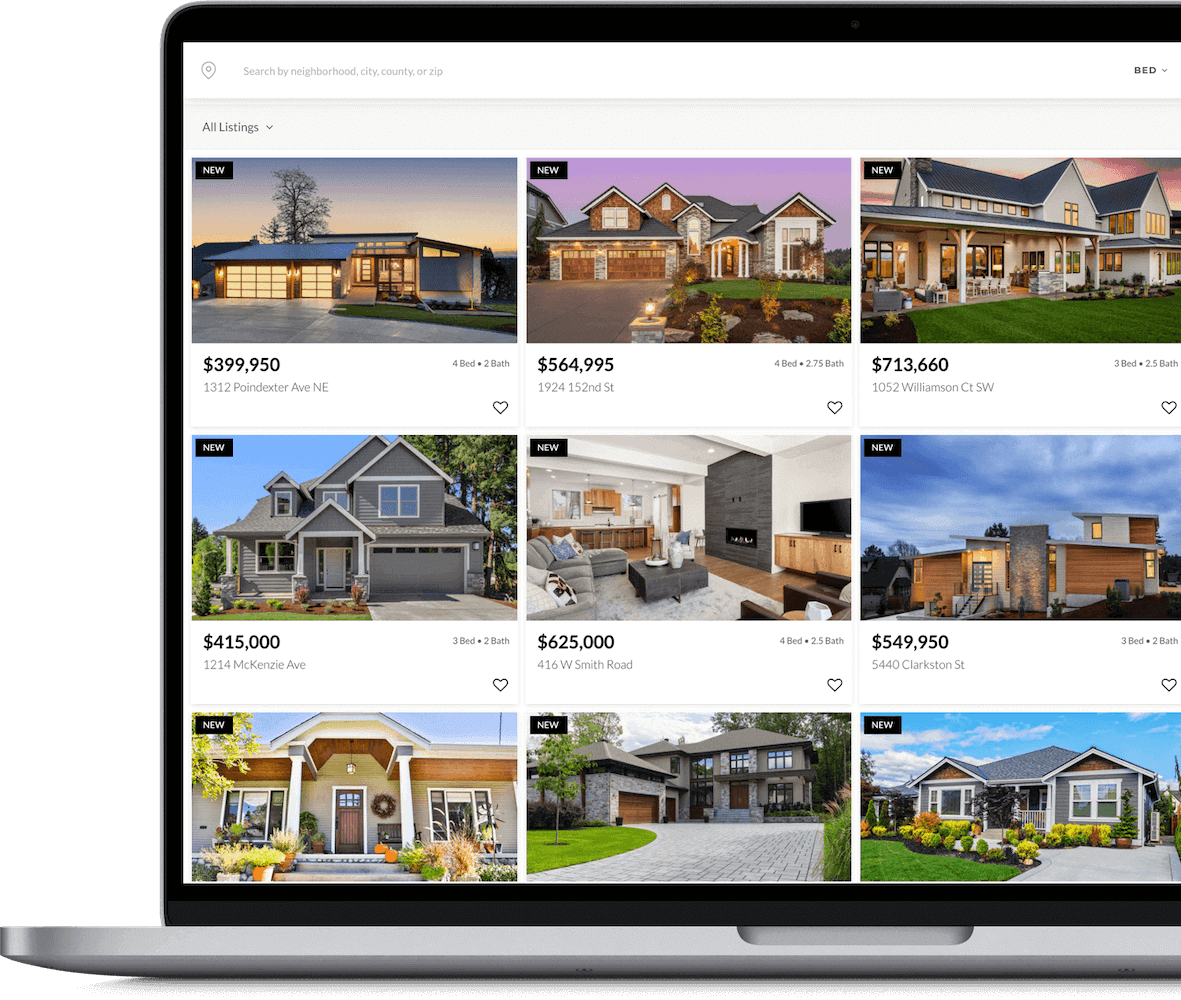
Search for homes anywhere, anytime
When you are ready to buy a home, start by making a wish list and setting a budget. Depending on your finances, you may need to choose a lender to get pre-approved for a loan so you can better understand your buying power. The pre-approval letter will also illustrate your financial readiness to sellers and make your offers more compelling.
You can search for the perfect property using this website on any device, including your desktop, laptop, tablet, or smartphone.
Start Searching